
 EN
EN
 RU
RU
 HY
HY
 IT
IT
 FR
FR
Fixed Fares Versus Surge Pricing for LAX Travel
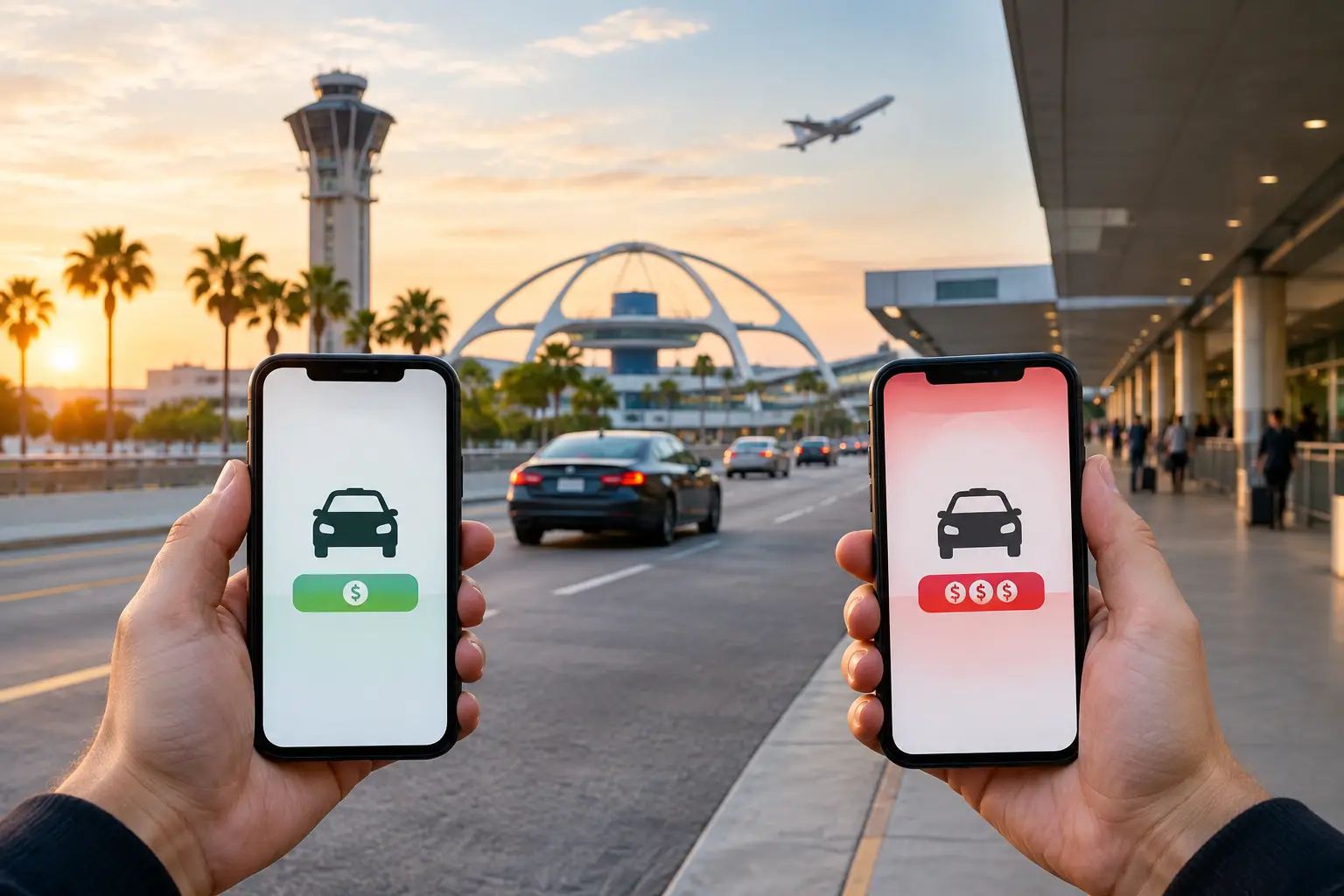
A late flight, a long customs line, and a crowded LAX pickup area can turn a simple ride into an expensive surprise. That is the practical difference between fixed fares versus surge pricing: one lets you know your transportation cost before you travel, while the other can change precisely when demand is highest.
For many travelers, the question is not whether an on-demand ride can be less expensive at a quiet hour. It sometimes can. The more useful question is what level of price certainty and arrival support you need when timing, luggage, family members, or an important meeting are involved.
Fixed Fares Versus Surge Pricing: The Core Difference
A fixed fare is agreed upon when you reserve your ride. With a pre-booked private transfer, the price is based on the route, selected vehicle, passenger count, and trip details provided during booking. You receive confirmation before your travel day, so your ground transportation budget is not left to airport traffic or a sudden increase in requests.
Surge pricing is a demand-based model commonly used by on-demand transportation platforms. When more people request rides than there are available drivers, the price can rise. Weather, concerts, major conventions, holiday weekends, flight disruptions, and the evening rush can all affect the fare displayed in an app.
Neither model is automatically right for every trip. Surge pricing can be convenient for an unplanned short ride when availability is strong and demand is low. Fixed pricing is generally more suitable when you want to arrange an airport pickup in advance, particularly after a long flight or for a time-sensitive departure.
Why Airport Demand Changes So Quickly
Airports create unusually concentrated demand. Hundreds of passengers can leave the same arriving flights within a short period, many needing a vehicle at roughly the same time. At LAX, that demand is layered with terminal activity, roadway congestion, construction patterns, traffic conditions, and the practical challenge of coordinating pickups in a busy airport environment.
A delayed flight can make the situation less predictable. A traveler who expected to arrive at 4:00 p.m. may instead enter the pickup area during the busiest part of the evening. With an on-demand service, the price and wait time visible earlier in the day may no longer apply.
A reserved chauffeur service approaches the situation differently. The reservation is associated with your itinerary rather than the moment you open an app. Flight tracking helps the driver prepare for an adjusted arrival time, and a scheduled meet-and-greet can remove the need to search for a vehicle while managing bags and directions in an unfamiliar terminal.
The Value of Knowing the Cost Before You Land
Price certainty matters most when transportation is part of a larger travel plan. International visitors may be managing exchange rates and hotel reservations. Families may need a vehicle with room for passengers, suitcases, and a child seat. Business travelers may have an expense budget or a client meeting that does not leave room for last-minute changes.
With a fixed all-inclusive price, you can decide whether the service fits your budget before confirming the reservation. You also have the opportunity to choose the right vehicle category rather than accepting whatever happens to be available nearby. A sedan may suit one or two travelers with light luggage, while an SUV or minibus may make more sense for a family or group arriving together.
This does not mean travelers should ignore the booking details. A fixed fare depends on an accurate reservation. Enter the correct pickup and drop-off locations, flight information, passenger count, and luggage needs. If your plans change, communicate as early as possible so the transportation provider can advise you on available options.
Price Is Only One Part of the Decision
Comparing fares alone can overlook the service surrounding the ride. An app-based ride may offer speed and flexibility for a traveler leaving a restaurant or making a spontaneous change of plans. However, airport transfers have different requirements: arrival monitoring, a reliable meeting plan, assistance with luggage, vehicle capacity, and a clear point of contact if circumstances change.
For a scheduled transfer, the useful comparison is often between a ride request and a complete arrival arrangement. A confirmed chauffeur, professional vehicle, one hour of complimentary airport wait time, and direct communication can be especially valuable when a flight arrives late or a passenger needs additional time after landing.
There is also the question of privacy and comfort. A private vehicle allows your party to travel directly to your hotel, home, office, or destination without sharing the ride. After an overnight flight, that can be more meaningful than saving a small amount during an off-peak period.
When Surge Pricing May Still Make Sense
Surge pricing is not always a poor choice. If you are already in Los Angeles, traveling alone, carrying little luggage, and have flexibility around departure time, checking an on-demand fare may be reasonable. A short daytime trip outside a busy event area could be competitively priced.
It can also work for travelers who prioritize immediate availability over vehicle selection, driver coordination, or a prearranged pickup. The key is accepting that the fare shown is tied to conditions at that moment. If demand rises, the price may rise with it, and waiting for it to fall can cost time.
For airport travel, this approach is best suited to travelers who are comfortable adapting their plans. It is less appealing when several people are waiting, children are tired, a hotel check-in is pending, or a departure flight cannot be missed.
When a Fixed Fare Is the Better Fit
A fixed-fare transfer is designed for occasions where uncertainty has a real cost. Consider reserving in advance when you are arriving after a long-haul flight, traveling with children or older relatives, carrying significant luggage, landing late at night, or coordinating a group of several passengers.
It is also a strong choice for early airport departures. Instead of checking driver availability before sunrise, you have a confirmed pickup arrangement and a planned vehicle. For executive travel, a private car service can also provide the professional presentation and quiet space that an unpredictable ride request may not.
LAX Transfer offers pre-booked private transportation for travelers who want that certainty, with vehicle options ranging from sedans to minibuses for groups of up to 12. The reservation process lets passengers provide route and flight details in advance, then receive immediate confirmation and direct support if they need assistance.
How to Compare Your Real Transportation Cost
Before choosing a ride, compare more than the first number you see. Look at the total expected cost, the likelihood of a demand increase, the size of the vehicle, and what happens if your arrival is delayed. For a fixed-price service, confirm what is included and make sure the booking reflects your actual travel party and itinerary.
Then consider the value of your time. A lower displayed fare may not remain lower if you wait through multiple price changes, struggle to locate the correct pickup area, or need to order a second vehicle because the first does not fit everyone and their luggage. Conversely, if your plans are truly flexible and demand is low, an on-demand ride may be a sensible option.
The best choice is the one that fits the trip in front of you, not just the fare displayed at a single moment. When an airport arrival needs to feel calm, organized, and predictable, reserving a fixed-price private transfer gives you one less travel variable to manage.